Attic Moisture, Ice Dams & Mold? Your Ventilation System Needs Help

Poor roof ventilation is the root cause of ice dams, attic moisture, and premature roof failure in Ottawa. We assess your current system and recommend upgrades that protect your roof and your home.

/ The Ventilation Problem

Poor Ventilation Causes Ice Dams, Moisture, Mold & Premature Roof Failure

Most homeowners don't think about their attic's air flow. That's a mistake.

Poor roof ventilation is the root cause of some of your biggest roofing problems.

Winter Ice Dams

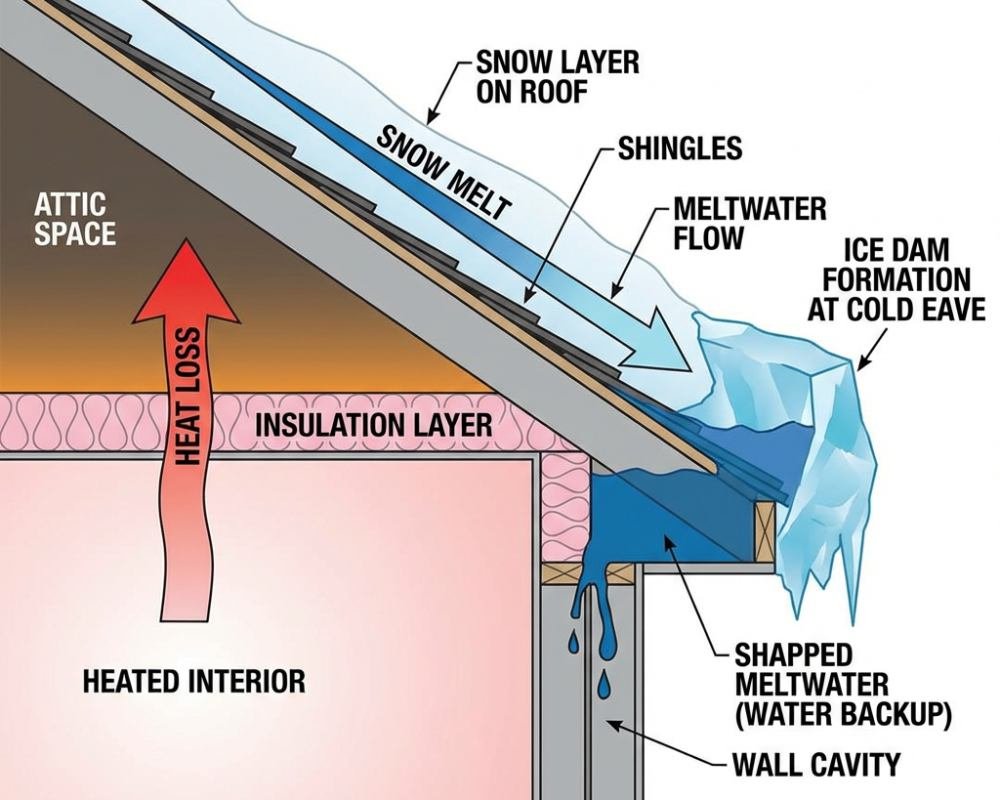
Heat from your home rises into the attic. Poor ventilation means this heat can't escape, so the roof stays warm. Snow melts on the warm roof even when the air temperature is below freezing. That meltwater runs to the roof edge, hits the cold air, and freezes—creating an ice dam that forces water backward under your shingles. Ice dams are one of the most common sources of winter water damage in Ottawa homes.

Attic Moisture & Mold

Winter indoor humidity rises into your attic. Without ventilation to remove it, moisture stays. It condenses on roof framing and insulation. Mold grows. Insulation loses its R-value. Wood rots.

Premature Roof Failure

Moisture trapped in your attic saturates shingles or membrane from below. Freeze-thaw cycles destroy materials from underneath. Your 25-30 year roof fails in 15-20 years because of moisture.

The Cascade of Damage

Poor ventilation → Moisture builds up → Mold grows → Insulation fails → Roof shingles fail → Water enters interior → Structural rot → Major repairs needed

The Costs

  • Adding ventilation: $1,500–$5,000
  • Attic mold remediation: $5,000–$50,000+
  • Replacing saturated insulation: $2,000–$8,000+
  • Roof replacement due to weather damage: $15,000–$40,000+

A $3,000 ventilation upgrade today prevents $50,000+ in damage tomorrow.

In Ottawa's climate, proper ventilation isn't optional. It's critical.
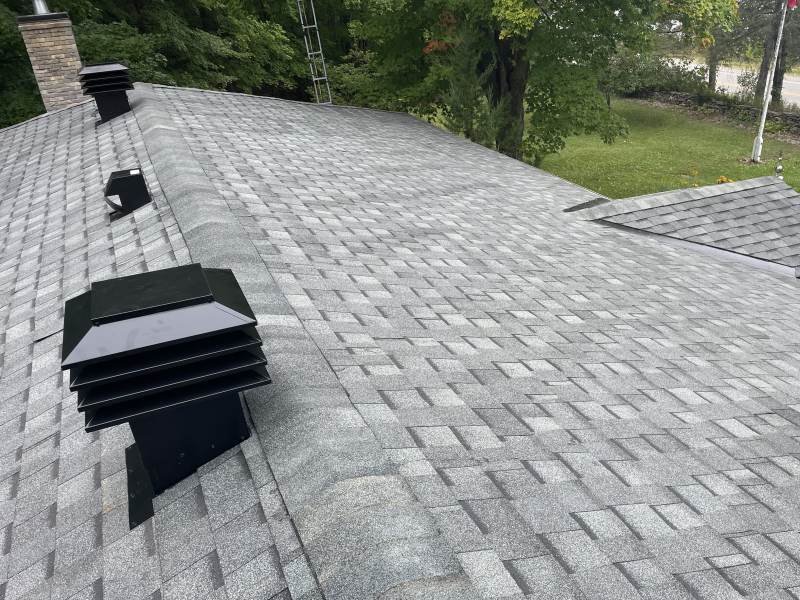
Attic Ventilation
/ Ventilation Science

The Science of Proper Roof Ventilation

The Ventilation Principle

Roof ventilation works on a simple principle:

  1. Cool outside air enters through soffit vents (under the eaves)
  2. Air flows through attic space
  3. Hot air rises and exits through roof vents (ridge vents, gable vents, turbine vents)
  4. This continuous air flow removes heat and moisture

Why It Matters

  • In winter: Removes excess heat so roof surface stays cold (preventing ice dams)
  • In summer: Removes heat and moisture, keeping insulation effective
  • Year-round: Removes moisture to prevent mold and rot

Proper Ventilation Ratio

Building codes require ventilation opening ratio of 1 square foot of ventilation for every 150 square feet of attic space (1:150) with proper baffles.

Most Ottawa homes have inadequate ventilation. Common ratios are 1:300 or worse.

The Problem with Many Ottawa Homes

  • Soffit vents blocked by insulation (no air intake)
  • Insufficient exhaust vents (not enough hot air exit)
  • Single gable vent (inadequate for whole attic)
  • No soffit vents at all (completely blocked intake)

Result: Ventilation system doesn't work. Heat and moisture stay in attic.

Types of Ventilation

Soffit Vents (Intake)

Perforated vents under the eaves allow air to enter. Must be open (not blocked by insulation).

Ridge Vents (Exhaust)

Continuous vents running along the roof peak allow hot air to exit.

Gable Vents (Exhaust)

Vents on exterior walls let air out. Less effective than ridge vents but help.

Turbine Vents (Exhaust)

Wind-powered vents that spin to pull air out. Effective but sometimes noisy.

/ Warning Signs

How to Know Your Attic Ventilation Needs Improvement

Winter Signs (Most Obvious)

  • Ice dams forming along roof edge repeatedly
  • Icicles hanging from eaves during winter
  • Water intrusion during winter even without visible damage

Attic Signs

  • Excessive heat in attic in summer
  • Moisture visible on attic framing or insulation
  • Wet or damp insulation
  • Mold or mildew visible on framing, insulation, or surfaces
  • Frost or condensation on roof deck (winter)
  • Musty smell in attic
  • Staining or discoloration on roof deck or framing
  • Soft or decayed wood on framing

Home Interior Signs

  • Water stains on upper walls or ceilings (winter)
  • Peeling paint near roofline
  • Damp feeling in upper floors (especially winter)
  • Musty smell in upper rooms
  • Mold spots visible in upper corners of rooms
  • Windows fogging up excessively (indicates high indoor humidity)

Exterior Signs

  • Excessive roof deterioration
  • Premature shingle failure or curling
  • Shingles wearing unevenly across the roof
  • Moss or algae growth on roof (indicates moisture)

Signs on Close Inspection

  • Soffit vents blocked by insulation (look in attic near eaves)
  • No visible ridge vent or ridge vent partially blocked
  • Single small gable vent for entire attic
  • Exposed insulation with no baffles (blocking airflow)
  • No airflow felt at vents
/ Assessment Process

How We Assess Your Roof Ventilation System

1

Visual Attic Inspection

We examine condition of soffit vents (blocked? adequate?), location and condition of exhaust vents, whether insulation is blocking vents, presence of baffles (to direct airflow), signs of moisture/mold/rot, and temperature and humidity in attic.

2

Ventilation Calculation

We calculate total attic square footage, current ventilation ratio (how many square feet of venting exists), target ventilation ratio (what's needed for proper function), and ventilation deficit (how much is missing).

3

Air Flow Assessment

We check whether soffit intake vents are actually drawing air, whether exhaust vents are pulling hot air out, whether there are blockages or restrictions, and whether airflow is balanced (intake and exhaust equal).

4

Identification of Problems

We identify blocked soffit vents, inadequate intake or exhaust, missing baffles, insulation blocking vents, exhaust vents discharging into attic instead of outside (common mistake), and poor air distribution across attic.

5

Specific Recommendations

We recommend specific improvements: add or unblock soffit vents, upgrade to continuous ridge vent, add exhaust vents (gable vents, turbine vents, etc.), install baffles to direct airflow, reposition insulation away from vents, or relocate/remove blockages.

/ Solutions

Ventilation Upgrades We Install

Improvement What It Does Best For Typical Cost Effectiveness
Unblock/Repair Soffit Vents Opens existing intake vents blocked by insulation or debris Homes with existing but blocked vents $200–$600 Very High
Add Ridge Vent Continuous exhaust vent along roof peak Most homes; continuous ventilation $1,500–$3,000 Very High
Add/Upgrade Soffit Vents Increases air intake under eaves Homes with inadequate intake $500–$1,500 High
Add Gable Vents Exhaust vents on exterior walls Homes without ridge vent option $500–$1,200 Medium
Add Turbine Vents Wind-powered exhaust vents Homes needing additional exhaust $300–$800 each Medium-High
Install Baffles Directs air into vents, prevents insulation blockage Most attics; prevents future blockage $400–$1,200 High
Reposition Insulation Moves insulation away from soffit vents Homes where insulation blocks vents $300–$800 High

The Best Solution for Most Ottawa Homes

  • Add/unblock adequate soffit vents for intake
  • Install continuous ridge vent for exhaust
  • Install baffles to maintain airflow
  • Reposition insulation away from vents

Cost: Usually $2,000–$4,000

Result: Eliminates ice dams, removes attic moisture, extends roof life, improves comfort

/ Ice Dam Solution

How Proper Ventilation Prevents Ice Dams

Ice dams are the #1 winter roof problem in Ottawa. Poor ventilation is the root cause.

How Ice Dams Form (With Poor Ventilation)

  1. Heat from your home rises into attic
  2. Poor ventilation means heat can't escape
  3. Roof deck warms to above freezing (even when outside air is below freezing)
  4. Snow on roof melts
  5. Meltwater runs to cold roof edge
  6. Meltwater freezes, creating ice dam
  7. Water pools behind dam, finding cracks and gaps
  8. Water backs up under shingles into your home

How Proper Ventilation Prevents Ice Dams

  1. Soffit vents draw cold outside air into attic
  2. This air flows across attic floor
  3. Air exits through ridge vent
  4. Roof deck stays cold (same temperature as outside air)
  5. Snow doesn't melt on roof
  6. No water reaches roof edge
  7. No ice dam forms
  8. Your home stays dry

Important Note

Even with perfect ventilation, some ice dams may form in extreme conditions. But good ventilation reduces frequency and severity dramatically.

The Ventilation Solution

For most Ottawa homes, adding a ridge vent and unblocking soffit vents eliminates 80-90% of ice dam problems. For remaining 10-20%, additional measures (gutter heating, etc.) may help.

Ice Dam Diagram
/ Roof Longevity

How Ventilation Extends Your Roof's Life by 10-15 Years

Poor ventilation shortens roof lifespan. Good ventilation extends it significantly.

Why Ventilation Matters for Roof Life

  • Moisture saturates shingles from below
  • Freeze-thaw cycles destroy saturated materials
  • A 30-year roof fails at 15-20 years with poor ventilation
  • Asphalt becomes brittle; shingles curl and crack prematurely
  • Metal roofs rust from underneath
  • Flat roof membranes degrade faster

With Proper Ventilation

  • Shingles stay dry from below
  • Freeze-thaw cycles are less damaging
  • A 30-year roof actually lasts 30+ years
  • Materials remain flexible and durable
  • Roof inspections show less deterioration

Example Impact

A roof that would fail in 18 years with poor ventilation can last 30+ years with proper ventilation.

Translation: Ventilation improvement can add 10-15 years to your roof's life.

/ FAQs

Frequently Asked Questions About Roof Ventilation

Proper ventilation ratio is 1 square foot of venting per 150 square feet of attic space. Most Ottawa homes fall short. We can calculate whether your home has adequate ventilation and recommend upgrades if needed. Call (343) 321-0218.
Yes, indirectly. Poor ventilation causes ice dams, which cause water intrusion. It also causes moisture buildup, which creates mold and rot. Both are problems.
In most cases (80-90%), yes. Adding adequate soffit vents and a ridge vent eliminates ice dams. Some extreme years may still have minor ice dam activity, but it's much less severe.
Ridge vents are superior because they provide continuous exhaust along the entire roof peak. Gable vents help but don't ventilate the entire roof as effectively. Combination of ridge vent + multiple gable vents can work if ridge vent isn't possible.
Depends on your current system and what upgrades are needed. Adding ridge vent and unblocking soffit vents typically costs $2,000–$4,000. Simpler fixes (just unblocking vents) might be $500–$1,500. Call for your free estimate.
Yes. Summer ventilation keeps insulation effective, reduces attic temperature, and removes humidity. Winter ventilation prevents ice dams and moisture. Good ventilation helps year-round.
/ Our Expertise

Why Ottawa Homeowners Trust Burnham Brothers for Ventilation Solutions

35 Years of Roofing Experience

We understand ventilation's critical role in roof longevity and home health.

❄️

Ice Dam Specialists

We solve Ottawa's worst winter problem through proper ventilation.

📊

Comprehensive Assessment

We don't just add vents randomly. We calculate proper ventilation ratios.

🌍

Ottawa Climate Expertise

We understand freeze-thaw cycles and extreme moisture challenges unique to our region.

🛡️

Long-Term Thinking

We design ventilation to extend roof life 10-15 years.

Licensed & Insured

Full liability and WSIB compliance. You're protected.

When Ottawa homes need ventilation help, they call Burnham Brothers.

Get Your Free Estimate Today

Contact Burnham Brothers for professional service and expert assessment.

Call Now Quick Quote