Roof Leaking? We'll Find It & Fix It Right

Roof leaks are sneaky—water travels under your roof, so where it drips inside isn't always where it got in. We use professional techniques to pinpoint the leak source and fix it permanently.

/ The Hidden Danger

Roof Leaks Aren't Small Problems—They're Disasters in Progress

A roof leak today becomes a major problem tomorrow.

Water doesn't announce itself. It finds a hole or crack in your roof, runs under the membrane or shingles, travels 5-15 feet (or more), and finally drips into your attic or ceiling. By the time you notice the drip, the damage is already extensive.

What's Happening While You're Not Looking

  • Hour 1-12: Water soaks insulation, reducing its R-value
  • Hour 12-24: Water soaks into roof framing and starts rotting it
  • Day 1-2: Mold spores germinate in wet insulation and wood
  • Day 2-7: Mold colonies establish and start breaking down materials
  • Week 1+: Structural rot, insulation failure, interior water damage, health hazards

The Costs Scale Dramatically

  • Finding and fixing a small leak: $200–$500
  • Repairing water-damaged insulation and framing: $2,000–$10,000
  • Mold remediation and health issues: $5,000–$50,000+
  • Full roof replacement: $15,000–$40,000+

A $300 leak repair today prevents a $40,000 disaster tomorrow.

In Ottawa's climate, the danger is even greater. Our freeze-thaw cycles create new cracks and openings constantly. A small leak today will be bigger next spring.
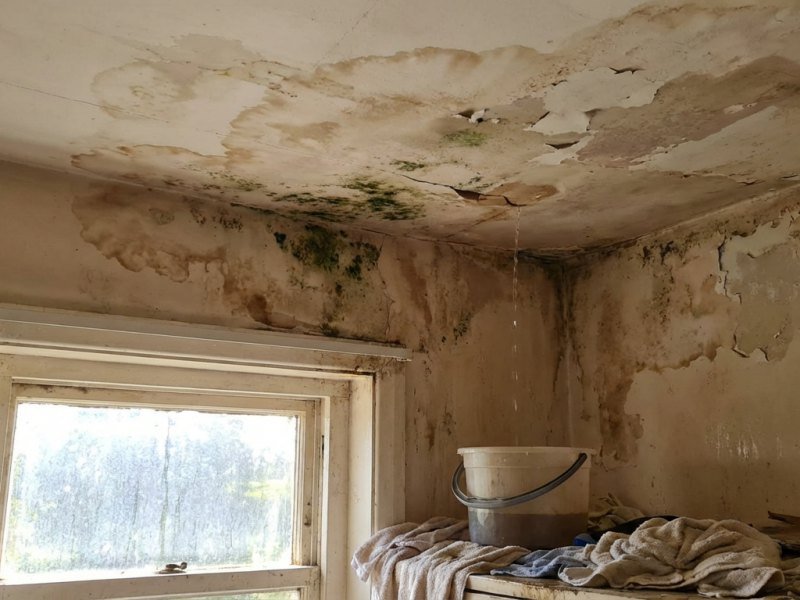
Water Damage
/ Leak Diagnosis

Types of Roof Leaks We Find and Fix in Ottawa

Leak Type Where It Enters Where You See Water Detection Difficulty Urgency
Shingle Crack Crack in shingle; often from freeze-thaw Below the crack or downslope EASY HIGH
Valley Leak Failed valley flashing or installation error Usually 10-15 feet downslope in attic MEDIUM CRITICAL
Chimney Flashing Gap or rust in chimney flashing Around chimney interior or below in attic MEDIUM CRITICAL
Vent Pipe Leak Gap between vent pipe and roof, failed caulk Around vent pipe or below in attic EASY CRITICAL
Roof Edge/Drip Edge Water flowing under roof edge Along upper walls, often at multiple points MEDIUM HIGH
Skylight Leak Failed caulk or flashing around skylight Around skylight interior, below in attic EASY-MEDIUM CRITICAL
Roof Penetration Any hole (antenna, satellite dish, etc.) Below the penetration EASY CRITICAL
Ice Dam Ice forcing water backward under shingles Along eaves, sometimes entire width MEDIUM CRITICAL
/ DIY Investigation

How to Locate Your Roof Leak

Clues That Help Us Fix It Faster

While we're excellent at finding leaks even when homeowners can't, here's how to start investigating:

Follow the Water (Most Reliable)

  • Look at where water is entering inside
  • Go to your attic with a flashlight
  • Look upslope from where water is entering
  • Check insulation, rafters, and roof deck for wet spots
  • Trace water stains upslope—they often point toward the leak source

Important: Water travels downslope and inward. The leak is higher on the roof or further upslope than where water appears inside.

Check the Obvious Areas First

Chimneys

  • Go to attic
  • Inspect where chimney penetrates roof
  • Look for water staining around chimney
  • Check flashing for gaps or rust

Vent Pipes

  • Go to attic
  • Look at vent pipe penetrations
  • Look for water stains or wet insulation around vents
  • Check where pipe meets roof

Valleys

  • Go to attic
  • Look at valley line (where two roof slopes meet)
  • Check for water stains along valley
  • Look for wet insulation

Roof Edges

  • Go to attic
  • Inspect roof edge area
  • Look for water staining on top of rim board or top plate
  • Check insulation at edges

Ice Dam Investigation (Winter)

  • Look at roof from outside
  • If you see ice dams (ice backing up along the roof edge)
  • Note where water staining appears inside
  • This tells us where ice dam forced water in

Document Your Findings

Write down:

  • Exact location of water entry (room, wall, height on wall)
  • When you see the leak (during rain, after rain, specific weather)
  • How much water is leaking (dripping, running, soaking)
  • Where in the attic you found water stains
  • Any observations about the roof above the leak area

This information helps us diagnose your leak much faster.

/ Our Process

How We Find & Fix Roof Leaks

1

Detailed Interior Inspection

We start inside, not outside. We examine where water is entering, look for water stains in attic and walls, check insulation condition, and document the water entry pattern. Why? Water travels under the roof. The leak source is often 10-15 feet from where water enters inside.

2

Exterior Roof Inspection

We get on the roof and inspect the entire roof surface, all valleys, all flashing (chimneys, vents, skylights, walls), roof edges, all penetrations, and shingle or membrane condition. We look for visible cracks, separation, rust, wear, improper installation, and areas where water concentrates.

3

Correlation & Diagnosis

We correlate interior and exterior observations to pinpoint the probable leak source. We determine the path water travels and identify findings like "chimney flashing is rusted and separated—water is flowing in here" or "valley was installed improperly—water is flowing under shingles."

4

Advanced Detection (If Needed)

For difficult leaks where we can't pinpoint the source, we may use moisture detection equipment (thermal imaging, moisture meters) or perform water testing (running water on suspected area and looking for it in the attic).

5

Clear Quote

Your estimate specifies the probable leak source, why that's where the leak is coming from, how we'll repair it, materials needed, labor required, cost, and timeline.

6

Professional Repair

We repair the specific leak source: replace failed flashing, seal cracks or holes, install new caulk or sealant, replace damaged shingles or membrane, and ensure water can't enter the same way again.

7

Verification & Testing

For repairs we're very confident about, we may run water on the repaired area to confirm the fix works. We inspect our work, clean up, and verify drainage.

8

Your Satisfaction

We walk through the repair with you. If you have concerns, we address them before we leave.

Timeline: Most leak repairs take 1-3 days depending on the leak type and repair complexity.

/ Understanding Water Flow

Why Finding Roof Leaks Is Harder Than It Seems

Homeowners often think: "Water is coming in at point A, so the leak is at point A." This logic seems obvious but is often wrong.

Water Travels

When water gets under your roof, it doesn't drip straight down. It flows downslope and inward, sometimes traveling 10-20+ feet before entering your home. A leak at the roof edge might not show water damage until it reaches an interior wall 15 feet away.

Multiple Pathways

Water can run under multiple layers (shingles, underlayment, roof deck) before finding an opening to enter your home.

Timing

Rain might fall on your roof for hours before the leak starts. If conditions are right, water might flow under your roof for 30-60 minutes before you see it inside. By the time you notice, the water that caused it fell hours ago.

Complex Paths

In valleys, along roof edges, and around penetrations, water can follow complex paths. It might flow along a valley for 20 feet, across your roof deck for another 10 feet, and finally drip into your attic—far from where it entered.

Multiple Potential Leaks

Sometimes homes have more than one leak. Multiple leak sources mean the water entry pattern becomes confusing.

Ice Dams

In winter, ice dams force water backward under shingles. Water might enter your roof at the roof edge, travel up and inward under the ice dam, and enter your home 15+ feet from where it got in.

This is why professional leak detection is valuable. We understand water flow, we inspect both interior and exterior, and we correlate the evidence to find the actual source.

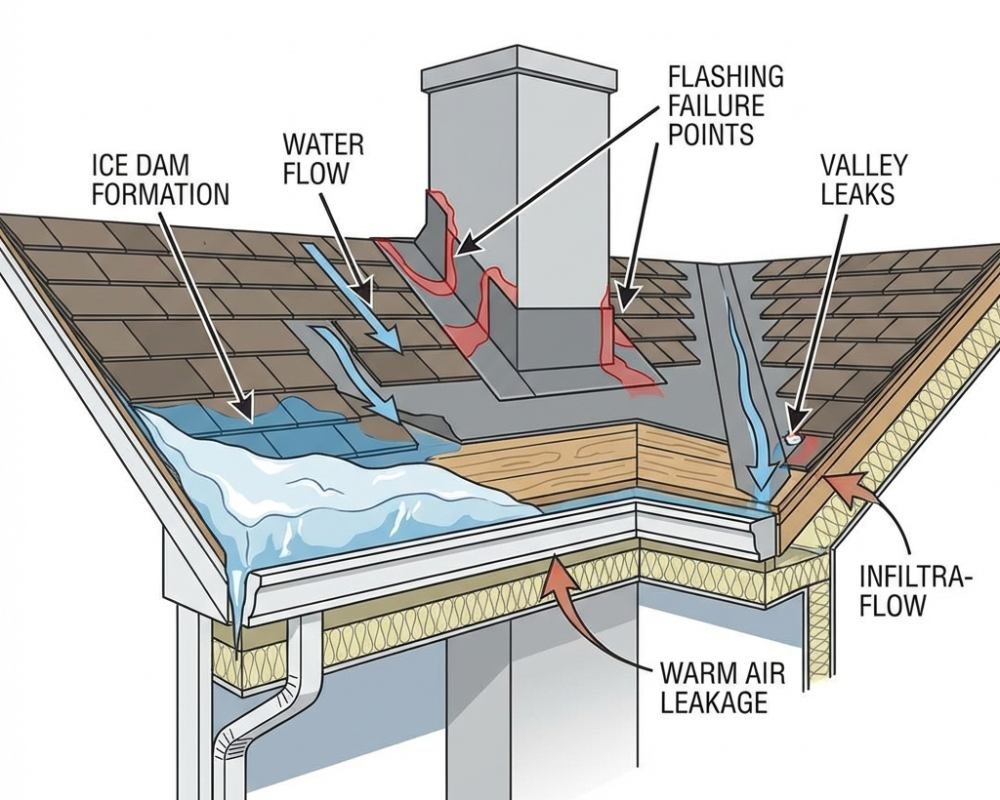
Water Flow Diagram
/ Decision Guide

Leaking Roof: Should You Repair or Replace?

Single small leak + roof otherwise good = REPAIR

Fix the leak and your roof will continue serving well.

Multiple leaks in different areas + roof 15+ years old = REPLACEMENT

Multiple leak sources often mean the roof is failing systematically. Replacement makes sense.

Active leak + water damage in attic = REPAIR (usually)

Fix the leak source and assess any water damage. Unless the roof is very old, repair is usually sufficient.

Leak + extensive attic water damage + roof decay visible = REPLACEMENT

If water damage is so extensive that rot is present in the roof structure, replacement is necessary.

When Leak Repair Is Smart

  • Roof less than 15 years old
  • Single leak source (or isolated leaks)
  • Underlying roof structure is sound
  • This is the first leak you've had

When Replacement Is Better

  • Roof 20+ years old
  • Multiple leak sources
  • Visible rot or decay in roof structure
  • Repeated leaks even after repairs
  • Extensive water damage to attic
/ Climate Impact

Why Ottawa's Climate Creates More Roof Leaks

Freeze-Thaw Cycles Open New Leaks

Every freeze-thaw cycle stresses your roof. Water gets into tiny cracks, freezes, expands, and widens the crack. New cracks mean new potential leak sources.

Ice Dams Force Water In

Winter ice dams force water backward under shingles across the entire roof width. Even well-sealed roofs can't prevent this water intrusion.

Heavy Snow Creates Stress

Spring wet snow loads stress fasteners, connections, and flashing. This stress can cause seals to break and create new leak sources.

UV + Moisture

Summer sun hardens roofing materials. Moisture penetrates these hardened materials and creates gaps. Fall arrives with more moisture. Winter freeze-thaw exploits these gaps.

Gutters Freeze & Overflow

Frozen gutters can't drain water properly. Water backs up and forces its way under the roof edge.

What This Means

Ottawa roofs experience 50+ freeze-thaw cycles per winter. Each cycle creates stress and potential new leak sources. A leak you fixed last year might be caused by new damage this winter.

This is why:

  • Regular inspections catch new problems early
  • Prompt repairs prevent small leaks from becoming big damage
  • Good attic ventilation and insulation reduce ice dam risks
  • Proper gutter maintenance prevents overflow damage

Our Approach: We repair leaks knowing Ottawa's climate creates ongoing challenges. We fix the current leak and help you prevent future ones.

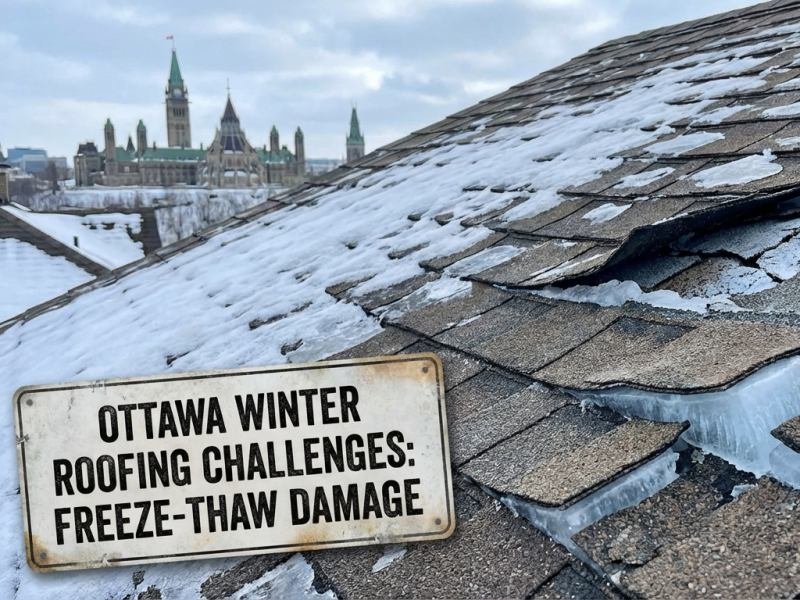
Freeze-Thaw Cycles
/ FAQs

Frequently Asked Questions About Roof Leaks

Honestly? Not long. Mold grows within 24-48 hours in wet conditions. Structural rot can begin within weeks. We recommend fixing leaks immediately, or at minimum within a few days. Every day a leak continues, damage accumulates.
No. A bucket under a drip might prevent water from dripping on your floor, but inside your roof, water is still soaking insulation, rotting framing, and growing mold. You're not solving the problem—you're just hiding the evidence while damage spreads.
Temporarily, yes. A tarp over the damaged area stops water from getting in that spot. But tarps are temporary—they don't last more than a few weeks. You need a permanent repair. We use tarps for emergency protection while planning permanent repairs.
We patch leaks all the time if they're small and localized. But if the underlying structure is damaged or if the leak source is a systematic problem (like ice dams), patching won't work long-term. We assess whether a patch or a larger repair is needed.
It depends on the leak source and repair required. A simple caulk repair might be $150–$300. A flashing repair could be $300–$800. A larger repair might be $1,000–$3,000. Call (343) 321-0218 for an estimate.
That's very common. Water travels under the roof. We're experts at finding these hidden leaks. We use inspection, deduction, and sometimes moisture detection equipment. Call us—we'll find it.
Possible for very simple issues (recaulking a vent pipe), but risky. Improper repairs often fail within 1-2 years. Professional repairs are designed to last 10-15+ years. It's worth the investment.
/ Our Expertise

Why Ottawa Homeowners Call Us When Their Roofs Are Leaking

🔍

Expert Leak Detection

We find leaks even when they're difficult. We understand water flow and use professional inspection techniques.

35 Years of Experience

We've found and fixed thousands of roof leaks in Ottawa. We know what to look for.

🏠

All Roof Types

Asphalt, metal, flat, cedar—we repair leaks on all types.

❄️

Ottawa Climate Knowledge

We understand freeze-thaw cycles, ice dams, and heavy snow create new leaks.

🔧

Permanent Repairs

We don't patch over problems. We fix the root cause so leaks don't recur.

Honest Assessment

If repair works, we recommend repair. We don't replace roofs for profit.

When Ottawa homes leak, they call Burnham Brothers.

Get Your Free Estimate Today

Contact Burnham Brothers for professional service and expert assessment.

Call Now Quick Quote