Flat roofs are vulnerable to pooling water, UV damage, and membrane failure. Expert repairs on residential and commercial flat roofs keep Ottawa homes and buildings protected.
Flat roofs are efficient and economical. But they have a fatal weakness: water sits on them instead of running off.
That standing water is your problem. It accelerates UV breakdown of the membrane. It finds every tiny hole and seam failure. It's relentless in Ottawa's climate.
By the time you notice water dripping inside, you could have thousands of square feet of wet insulation and rotted wood.
A $300 membrane patch today prevents a $20,000+ roof system replacement and interior damage tomorrow.
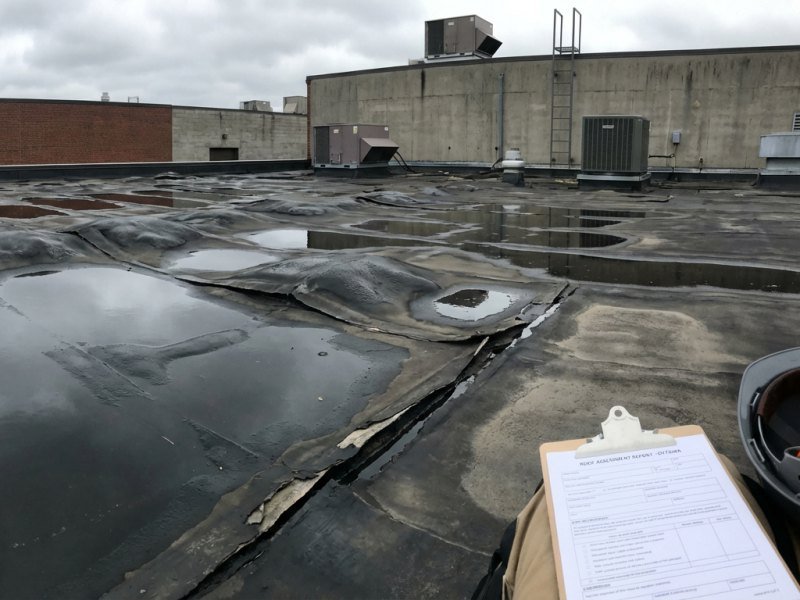
Looks like: Visible holes, tears, or cracks in surface
Why it happens: Foot traffic, debris, improper installation, age
CRITICAL
Looks like: Seams separating, membrane pulling apart at edges
Why it happens: Freeze-thaw expansion/contraction, poor original work
CRITICAL
Looks like: Visible standing water 24+ hours after rain
Why it happens: Improper slope, blocked drains, settling deck
HIGH
Looks like: Bubbles or blisters in membrane surface
Why it happens: Moisture trapped between membrane and deck
HIGH
Looks like: Gaps or rust where membrane meets walls/vents
Why it happens: Sealing failure, fastener corrosion, freeze-thaw
CRITICAL
Looks like: Membrane looks chalky, hard, or brittle
Why it happens: Sun exposure; EPDM lasts 20-30 years, TPO 15-25
MEDIUM-HIGH
Looks like: Linear tears or cracks, often parallel
Why it happens: Substrate movement, settling, freeze-thaw stress
CRITICAL
Looks like: Leaves, branches, algae/moss on surface
Why it happens: Poor drainage, lack of maintenance, shaded areas
MEDIUM
Flat roof leaks can be tricky—water travels under the membrane before leaking inside, so the leak spot might be far from where water enters the building. We walk the entire roof and inspect membrane condition, test all drains and check for ponding, examine all flashing and penetrations, check the underlying deck condition, and sometimes use moisture detection equipment to find wet areas. We take photos showing what we find.
If there's evidence of water under the membrane, we assess how extensive the damage is. A small wet area might just need a patch. Extensive moisture means more work—or possibly replacement.
Your estimate covers where the leak source is, how we'll repair it (patching, resealing, flashing replacement), membrane type and materials needed, underlying deck damage (if any), drainage improvements or fixes, labor and materials, and timeline.
We remove the damaged membrane section (or patch it if possible), inspect and dry the underlying deck, treat any mold or moisture issues, and install new membrane material using manufacturer-approved methods and adhesives rated for our climate. We work with EPDM, TPO, modified bitumen, and EPDM with gravel coating.
We ensure all roof penetrations (vents, drains, walls) are sealed properly. Flashing is often the weak point on flat roofs, so we pay special attention here.
We check that water drains properly and isn't pooling. If ponding is an issue, we discuss solutions. We inspect our work, ensure proper drainage, and clean up completely before you inspect. <strong>Timeline: Most flat roof repairs take 1-3 days depending on the extent of damage.</strong>
Flat roofs experience extreme stress in freeze-thaw cycles. Water sits on the membrane, freezes, and creates ice that stresses seams. Thawing releases that stress, eventually causing tears and seam failure.
When snow melts, water collects on flat roofs. If drainage is imperfect (which it often is), that water sits and sits. In Ottawa's climate, this can last for weeks in spring. That's time for water to find every weakness.
Spring snowmelt and October/November wet snow loads stress the underlying roof deck. Structural movement causes the membrane to crack and seams to separate.
Summer UV breaks down membrane materials. Winter UV (reflected off snow) continues the damage. EPDM, TPO, and modified bitumen all degrade faster in Ottawa than in milder climates.
Road salt spray corrodes metal flashing and fasteners on flat roofs. This accelerates flashing failure and allows water entry.
Your flat roof in Ottawa needs proper sloping to eliminate ponding (or very good drainage systems), quality membrane materials rated for freeze-thaw, strong seam construction using products tested for our climate, regular maintenance and inspections, and proper ventilation to prevent moisture buildup under the membrane.
We repair flat roofs with Ottawa's punishing climate in mind. We use products rated for freeze-thaw cycling, we ensure proper drainage, and we recommend preventative inspections every 2-3 years.
We've repaired thousands of EPDM, TPO, and modified bitumen roofs in Ottawa. We know what works in our climate.
EPDM, TPO, modified bitumen, BUR—we're trained on all of them.
Certified by BP Canada for commercial and residential flat roofing.
We understand freeze-thaw challenges, ponding problems, and snow load stress.
If a repair will solve the problem, we recommend repair. We don't suggest replacement for profit.
We use membrane products and adhesives rated for freeze-thaw cycling and UV exposure.
We pinpoint leak sources accurately using inspection and sometimes moisture detection equipment.
Full liability and WSIB compliance for residential and commercial work.
Contact Burnham Brothers for professional service and expert assessment.