Damaged Roof Flashing? Expert Repairs That Stop Leaks

Flashing is your roof's armor against water intrusion at chimneys, vents, and walls. Failed flashing is the #1 cause of roof leaks in Ottawa. We fix it right, so it stays fixed.

/ The Hidden Threat

Damaged Flashing Is the #1 Roof Leak Source—And It's Sneaky

Every hole in your roof is a potential leak.

Chimneys, vent pipes, skylights, where your roof meets your walls—each one needs flashing to seal the gap and direct water safely away. When flashing fails, water doesn't drip in one visible location. It runs inside walls. It travels through your wall cavity. It soaks insulation, rots framing, and grows mold where you can't see it until the damage is catastrophic.

What Failed Flashing Creates

  • A gap in your roof's armor where water gets in
  • Water running between your roof and the penetration (chimney, vent, etc.)
  • Water flowing into your walls or attic
  • Mold growing in hidden wall cavities
  • Structural rot in framing you can't see
  • Interior wall damage that becomes visible only after months of hidden damage

Why Ottawa's Climate Makes This Worse

  • Freeze-thaw cycles stress flashing fasteners and seals
  • Road salt spray corrodes fasteners and coatings
  • Ice dams force water backward under flashing
  • Heavy snow loads stress roof-to-wall connections
  • Spring melt creates massive water flow through flashing

The Timeline for Damage

  • Hour 1: Water gets in at failed flashing
  • Day 1-2: Water soaks wall insulation and framing
  • Week 1: Mold begins growing in wall cavity
  • Month 1: Interior wall damage may become visible as water stains
  • Month 2-3: Significant structural rot possible if conditions allow

The Costs

  • Flashing repair: $300–$800
  • Water damage in walls: $5,000–$20,000+
  • Mold remediation: $5,000–$50,000+
  • Structural repairs: $10,000–$100,000+

A $400 flashing repair today prevents a $50,000 disaster tomorrow.
Flashing Detail
/ Flashing Guide

Flashing Types We Repair in Ottawa Homes

Flashing Type Location What It Looks Like Common Problems Urgency
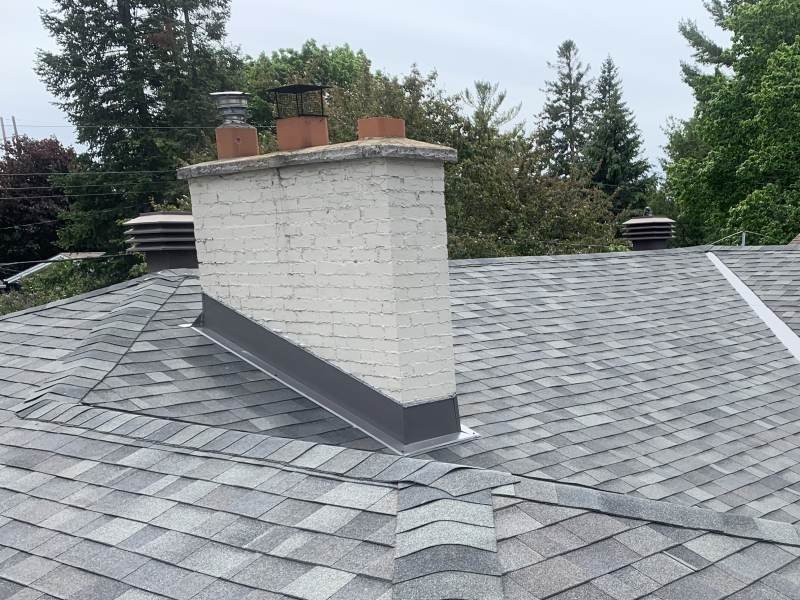
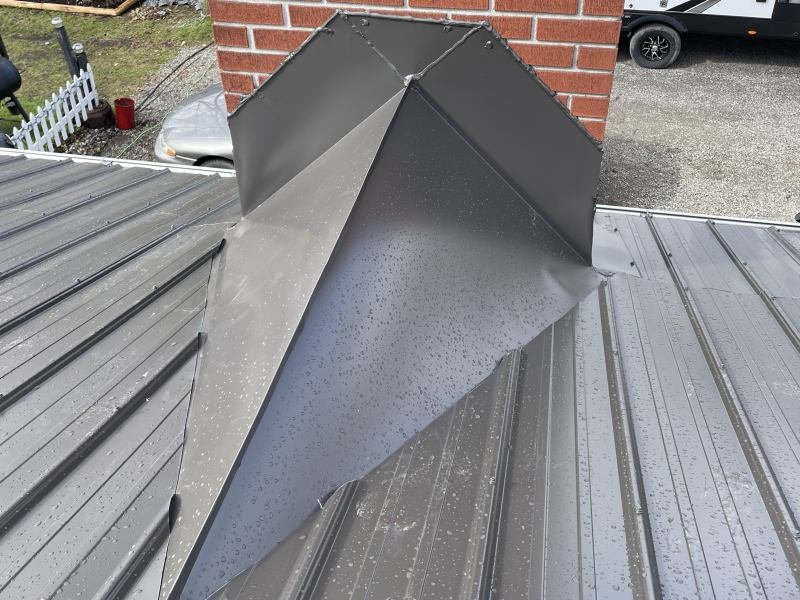
Chimney Flashing Where chimney meets roof Metal sheet bent to fit roof slope and chimney Rust, separation, caulk failure, fasteners loose CRITICAL
Vent Pipe Flashing Where plumbing/exhaust vents penetrate Boot-shaped flashing with pipe going through center Cracks in boot, caulk failure, fasteners loose, rust CRITICAL
Skylight Flashing Where skylight frame meets roof Flashing around entire skylight perimeter Separation, caulk failure, fasteners loose, rust CRITICAL
Wall Flashing Where roof meets exterior wall Metal flashing at angle between roof and wall Rust, gaps, caulk failure, ice dam water backing up CRITICAL
Valley Flashing Where two roof slopes meet Metal or membrane flashing in valley Separation, rust, improper installation, debris CRITICAL
Roof Edge/Drip Edge Outer edge of roof at eaves Metal flashing at roof edge Rust, separation, improper slope HIGH
Saddle Flashing Behind chimneys on sloped roofs Metal saddle behind chimney directing water around it Rust, separation, caulk failure CRITICAL
Sidewall Flashing Side of chimney Metal flashing where roof slope meets chimney side Rust, separation, caulk failure CRITICAL
/ Warning Signs

How to Spot Flashing Problems Before They Cause Leaks

Visual Signs on Roof

  • Visible rust or discoloration on any flashing
  • Rust staining on roof surface below flashing
  • Gaps visible between flashing and roof or wall
  • Flashing that looks lifted or separated
  • Caulk or sealant that's cracked, missing, or deteriorated
  • Fasteners visible or corroded
  • Flashing visibly bent or damaged

Around Penetrations

  • Chimney: Rust, gaps, or water staining around chimney base
  • Vents: Cracks in boot, rust, or gaps around vent pipe
  • Skylight: Gaps, rust, or separation around frame
  • Wall junction: Gaps or rust where roof meets wall

Interior Signs

  • Water stains on interior walls near chimneys or vents
  • Water stains on ceilings near roof penetrations
  • Peeling paint around chimneys or near roofline
  • Damp or soft drywall near roof penetrations
  • Musty smell near chimneys or upper walls
  • Water running down interior walls during rain

In the Attic

  • Water stains on framing near chimneys or vents
  • Wet insulation near penetrations
  • Mold or mildew smell
  • Streaks of water running down framing

After a Storm or Heavy Rain

  • New water stains appearing
  • Water entry during or shortly after rain
  • Water running down interior walls in previously dry areas
/ Repair Steps

Our Expert Flashing Repair Process

1

Detailed Flashing Inspection

We perform comprehensive inspection of all roof flashing: walk the entire roof exterior, inspect every penetration (chimneys, vents, skylights), check all wall junctions, look for rust/separation/gaps/failed caulk, check fasteners, inspect the attic for water damage, and take photos documenting our findings.

2

Identify the Problem

We determine what's causing the flashing failure: corrosion/rust (fasteners, materials, coatings), separation or gaps (fastener failure, freeze-thaw, settling), failed caulk or sealant, improper installation (original installation error), ice dam water forcing its way under flashing, or material incompatibility or decay.

3

Assess Water Damage

If the flashing has been failing, we check for water inside walls or attic, mold growth, rot in framing, and insulation damage. This helps us understand the full scope of the problem.

4

Clear Quote

Your estimate specifies which flashing is damaged, why it's failing, how we'll repair it (sealing, re-fastening, or replacement), materials needed, any water damage found, labor and materials cost, and timeline.

5

Flashing Repair

Depending on what's wrong, we treat corrosion with protective coating, re-secure separation with proper fasteners (usually stainless steel), remove old caulk and apply new roofing-grade sealant, or remove and replace damaged flashing with proper installation.

6

Proper Sealing

All flashing connections get sealed with products rated for roofing use, freeze-thaw cycling, UV exposure, and movement and expansion. We don't use cheap caulk that fails within a year.

7

Fastener Upgrade (When Appropriate)

If we're replacing corroded fasteners, we upgrade to stainless steel or hot-dipped galvanized fasteners that resist salt corrosion better than original fasteners.

8

Final Verification

We inspect all repairs, verify drainage, ensure water will shed properly, and clean up completely.

Timeline: Most flashing repairs take 1-2 days depending on complexity and how many flashing areas need work.

/ Installation Quality

Why Flashing Installation Is Critical—And Why Original Installation Often Fails

Flashing isn't complicated, but it has to be done right. Small mistakes become big problems.

Common Installation Errors (That Cause Failures)

Improper Overlap

Flashing pieces must overlap in the right direction so water flows over them, not under them. Reversed overlap means water goes directly into your home.

Poor Sealing

Flashing sealed with cheap caulk fails in Ottawa's freeze-thaw cycles. Proper roofing sealant rated for these cycles stays flexible and waterproof.

Fastener Placement

Fasteners create holes—more holes means more leak potential. Fasteners need to be in the right places, properly spaced, and sealed around each one.

Material Incompatibility

Mixing incompatible materials (galvanized and stainless steel together, for example) causes corrosion and fastener failure through galvanic action.

Inadequate Slope

Flashing must slope properly so water drains away. Flat or backward-sloping flashing traps water.

Skipped Steps

Sometimes installers skip steps: improper substrate prep, no primer under sealant, inadequate number of fasteners. These "saved steps" cause failures.

Our Installation Standard

Every flashing repair we do:

  • Uses proper overlapping and water flow direction
  • Gets sealed with roofing-grade sealant rated for freeze-thaw
  • Has fasteners placed per code in critical areas
  • Uses compatible materials throughout
  • Slopes properly for drainage
  • Gets installed with all necessary steps completed

That's why our flashing repairs last 15-20+ years.

Installation Detail
/ Chimney Focus

Chimney Flashing: The Most Common Leak Source

Chimneys are the most common source of roof leaks in Ottawa homes. Here's why and how to prevent it.

Why Chimney Flashing Fails

  • Fastener corrosion: Salt spray corrodes fasteners rapidly
  • Freeze-thaw stress: Constant expansion/contraction at the chimney-roof junction
  • Caulk failure: Cheap caulk cracks in freeze-thaw cycles
  • Poor original installation: Many homes have poorly installed chimney flashing
  • Age: Flashing installed 20+ years ago is likely failing

The Problem

Chimney leaks often don't show obvious water entry. Water runs down inside the chimney structure or down the exterior wall. By the time you notice, extensive damage may have occurred.

Our Chimney Flashing Approach

  • Inspect exterior chimney flashing for rust and gaps
  • Inspect interior and attic for water damage
  • Repair or replace chimney flashing as needed
  • Use stainless steel fasteners for long-term durability
  • Seal with roofing-grade sealant
  • Discuss preventative measures (roof maintenance, inspection schedule)

Long-Term Chimney Flashing Strategy

  • Professional inspection every 3-5 years
  • Prompt repair of any rust or gaps
  • Quality sealant reapplication as needed
  • Preventative replacement of aging flashing before failure occurs
Chimney Detail
/ Decision Guide

Flashing Repair or Replacement?

Factor Repair Makes Sense Replacement Makes Sense
Problem Type Rust surface treatment, caulk failure, loose fasteners Severe corrosion, large holes, structural failure
Material Condition Material basically sound, isolated problem Material degraded, systemic corrosion, beyond repair
Age of Flashing Less than 20 years old 25+ years old, multiple problems
Water Damage No damage or minor damage Extensive water damage, mold, rot
Fastener Corrosion Minor rust on some fasteners Widespread fastener failure, corrosion systemic
Cost Logic Repair less than 30% of replacement cost Repair approaching 50%+ of replacement
Installation Quality Original installation was okay, just aging Original installation was poor (improper overlap, etc.)

When Repair Is Smart

Chimney flashing is 15 years old, showing some surface rust, caulk is cracked but flashing isn't separated, no water damage in the attic. Repair the flashing and you're good.

When Replacement Is Better

Chimney flashing is 28 years old, heavily rusted, fasteners are failing, water is in the attic, and mold is visible. Replace the flashing completely.

/ Climate Challenges

Why Ottawa's Climate Is Especially Hard on Flashing

Road Salt Accelerates Corrosion

Ottawa's winter road maintenance uses massive salt volumes. Salt spray lands on roofs, accelerating corrosion of metal fasteners and coatings. This is the #1 cause of flashing failure in our region.

Freeze-Thaw Cycles Stress Connections

Flashing sits at the junction between different materials (roof, chimney, wall). These materials expand and contract at different rates during freeze-thaw cycles. This constant stress loosens fasteners and cracks caulk.

Ice Dams Force Water Under Flashing

Winter ice dams can force water backward under flashing and into walls. Even well-sealed flashing can be overwhelmed by ice dam water volume.

Heavy Snow Loads Stress Connections

Spring wet snow creates heavy loads that stress roof-to-wall and roof-to-chimney connections. This can cause flashing to separate or shift.

What This Means

Ottawa flashing needs:

  • Stainless steel or high-quality fasteners that resist salt corrosion
  • Sealants rated for extreme freeze-thaw cycling
  • Professional installation done right
  • Regular inspections to catch problems early
  • Preventative maintenance before failures occur

Our Approach: We repair flashing with full knowledge of Ottawa's climate challenges. We use materials and techniques that survive our freeze-thaw cycles.

Climate Impact
/ FAQs

Frequently Asked Questions About Flashing Repair

Depends on what's wrong. A simple caulk repair might be $150–$300. A flashing re-fastening could be $300–$500. Flashing replacement runs $500–$1,500+ per area depending on the penetration type and complexity. Call (343) 321-0218 for an estimate.
You can try, but it usually fails quickly. Cheap caulk doesn't handle freeze-thaw. Improper prep means the new caulk won't stick. Professional re-caulking with roofing-grade sealant lasts 5-10+ years. It's worth the investment.
Ottawa's road salt is the main cause. Salt spray lands on your roof and corrodes metal fasteners and coatings. This is especially severe near major roads. We can assess how severe the rust is and recommend repair or replacement.
Absolutely. Ice dams can force water behind flashing, even well-sealed flashing. If ice dams are recurring, we recommend ventilation improvements to prevent them, not just flashing repair.
Properly installed flashing with quality materials and maintenance can last 20-30+ years. Poorly installed or poorly maintained flashing might fail in 10-15 years.
Not necessarily. If only one area is failing, we fix just that area. If multiple areas show problems, full flashing replacement might be more cost-effective than piecemeal repairs.
/ Our Expertise

Why Ottawa Homeowners Choose Burnham Brothers for Flashing Repair

🔍

Flashing Expertise

We specialize in flashing repair. We know every type and installation method.

35 Years of Experience

We've repaired thousands of flashing failures in Ottawa. We know what fails and how to fix it.

❄️

Ottawa Climate Knowledge

We understand salt corrosion, freeze-thaw stress, and ice dam damage. We repair knowing these challenges.

⚙️

Quality Materials

We use stainless steel fasteners and roofing-grade sealants—not cheap fasteners that fail.

Proper Installation

Our repairs are installed to code and manufacturer specs. They last.

🛡️

Licensed & Insured

Full liability and WSIB compliance. You're protected.

When Ottawa flashing fails, call the experts.

Get Your Free Estimate Today

Contact Burnham Brothers for professional service and expert assessment.

Call Now Quick Quote